

Hey there! As a supplier of KK thyristors, I often get asked a bunch of technical questions. One question that pops up quite a bit is, "Can multiple KK thyristors be connected in series?" Well, let's dive right into this topic and break it down.
First off, let's talk a bit about what KK thyristors are. KK thyristors, also known as fast - acting thyristors, are semiconductor devices that are widely used in power electronics. They can handle high currents and voltages, which makes them suitable for various applications like induction heating, welding machines, and power converters.
Now, back to the main question: Can you connect multiple KK thyristors in series? The short answer is yes, you can. But it's not as simple as just hooking them up one after another. There are several factors you need to consider to make sure the series connection works properly and safely.
Voltage Sharing
One of the biggest challenges when connecting KK thyristors in series is voltage sharing. When multiple thyristors are connected in series, the total voltage across the series combination is divided among them. However, due to differences in the electrical characteristics of each thyristor, such as leakage current and forward voltage drop, the voltage may not be evenly distributed.
For example, if one thyristor has a slightly higher leakage current than the others, it will tend to take on a larger share of the voltage. This can lead to over - voltage stress on that particular thyristor, which may cause it to fail prematurely. To address this issue, we usually use external components like resistors and capacitors to help balance the voltage across each thyristor. These components are known as voltage - sharing networks.
Gate Triggering
Another important aspect is gate triggering. All the thyristors in the series connection need to be triggered simultaneously. If one thyristor is triggered before the others, it will start conducting current while the rest are still blocking. This can result in an uneven distribution of current and voltage, which can damage the thyristors.
To ensure simultaneous triggering, we can use a common gate - triggering circuit. This circuit provides the same triggering signal to all the thyristors at the same time. Some advanced triggering circuits also have the ability to adjust the triggering delay to compensate for any small differences in the thyristors' turn - on characteristics.
Thermal Management
When multiple KK thyristors are connected in series, they generate more heat compared to a single thyristor. Proper thermal management is crucial to prevent overheating, which can degrade the performance of the thyristors and reduce their lifespan.
We can use heat sinks and cooling fans to dissipate the heat. It's also important to ensure that the thermal resistance between the thyristors and the heat sink is minimized. This can be achieved by using high - quality thermal interface materials.

Advantages of Series Connection
Despite the challenges, there are some significant advantages to connecting multiple KK thyristors in series. One of the main advantages is the ability to handle higher voltages. If a single KK thyristor has a voltage rating of, say, 1000V, by connecting two of them in series, we can theoretically handle up to 2000V. This is very useful in high - voltage applications where a single thyristor's voltage rating is not sufficient.
Another advantage is redundancy. If one thyristor in the series connection fails, the others may still be able to continue operating, at least to some extent. This can improve the reliability of the overall system.
Related Accessories
When working with KK thyristors, especially in series connections, there are some useful accessories that can enhance the performance and reliability of the system. For example, a Control Transformer can be used to provide a stable power supply for the control circuits. It helps to isolate the control signals from the main power supply and can also step down the voltage if necessary.
Carbon Free Rubber Hoses are useful for cooling applications. They can be used to carry coolant to the heat sinks, ensuring efficient heat transfer.
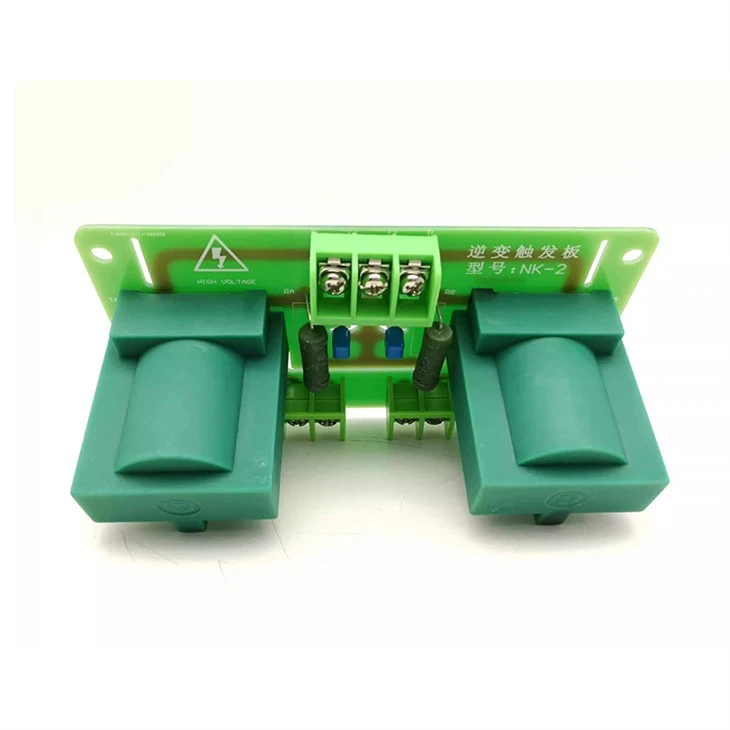
The Furnace Pulse Transformer Board is another important accessory. It can be used to generate and transmit the high - voltage pulses needed to trigger the KK thyristors accurately.
Conclusion
So, in conclusion, multiple KK thyristors can be connected in series, but it requires careful consideration of voltage sharing, gate triggering, and thermal management. When done correctly, series connection can offer the benefits of higher voltage handling and redundancy.
If you're working on a project that involves high - voltage applications and are considering using multiple KK thyristors in series, I'd be more than happy to help. As a supplier, I have a wealth of experience in this area and can provide you with the right products and technical support. Whether you need advice on the best way to connect the thyristors, or you're looking for high - quality KK thyristors and related accessories, just reach out to me. Let's have a chat and see how we can work together to make your project a success.
References
- "Power Electronics: Converters, Applications, and Design" by Ned Mohan, Tore M. Undeland, and William P. Robbins
- "Thyristor Applications Handbook" by General Electric Company