


Accessories for Induction Furnaces
What is Accessories for Induction Furnaces?
Accessories for induction furnaces are additional components and tools that enhance the functionality, safety, and efficiency of the furnace during various metal melting and heating processes.
Why Choose Us
Production equipment
We produce a complete set of equipment, induction power supply, furnace body, and cooler for 100kw-20000kw medium frequency induction melting furnaces and induction heating furnaces, which can meet the casting, forging, and heat treatment needs of metals in different fields.
Our Company
The company not only has industry-leading technological level, but also has a complete pre-sales and after-sales service process. At present, the cumulative number of customers served by the company has exceeded 3000, and our good reputation among customers has enabled us to continuously expand into new customers.
Production Market
We have successfully won the trust and support of over 2000 customers worldwide, and have successfully sold to multiple countries and regions such as Southeast Asia, the Middle East, North Africa, Eastern Europe, Central Asia, and South America, becoming the preferred brand for many metal processing enterprises in these regions.
Our Certificates
In 2023, Hexinda Electric Furnace received a Copyright Registration Certificate for its computer software used in manufacturing, processing, and production operation control systems. Additionally, we hold two Utility Model Patent Certificates.


Induction Heating and Importance of Foundry Coils
Induction heating does not involve the external application of heat but rather the internal generation of heat in the workpiece itself. This process dispenses with long heating periods and enables the limited introduction of heat in a local and precisely timed manner, thus achieving a high degree of efficiency and maximum exploitation of energy. When compared with conventional heating methods, induction heating achieves maximum levels of quality and efficiency across a practically unlimited range of applications.
Induction coil design
It is within the induction coil that the varying magnetic field required for induction heating is developed through the flow of alternating current. So coil design is one of the most important aspects of the overall system. A well-designed coil provides the proper heating pattern for your part and maximizes the efficiency of the induction heating power supply, while still allowing easy insertion and removal of the part.
Induction coils are normally made of copper tubing - an extremely good conductor of heat and electricity - with a diameter of 1/8" to 3/16"; larger copper coil assemblies are made for applications such as strip metal heating and pipe heating. Induction coils are usually cooled by circulating water and are most often custom-made to fit the shape and size of the part to be heated. So coils can have single or multiple turns; have a helical, round or square shape; or be designed as internal (part inside coil) or external (part adjacent to coil). There is a proportional relationship between the amount of current flow and distance between the coil and part. Placing the part close to the coil increases the flow of current and the amount of heat induced in the part. This relationship is referred to as the coupling efficiency of the coil.
The induction heating or foundry coil is the most important part of your induction heater. It's the coil that makes the magic happen for induction furnaces. The best induction generator is only as good as its weakest link. That link is often the induction coil – the wrong coil design can melt your workpiece. A clogged coil can bring your production line to a halt. A leaking coil and you're down for possibly weeks while you order another coil.
Do you Know About Induction Coil?
* The same induction heater can often be used for multiple applications with a coil change.
* Dual-head coils can increase your production rate.
* Flexible coil designs can be used on many different brands of induction heaters.
* Coils can be insulated in ceramic, concrete, or other non-metallic material and still be effective.
* It doesn't have to take 5 minutes to disconnect one coil and switch to another – quick change devices can make changing coils much faster.
Benefits of Using Induction Furnaces for Melting Copper
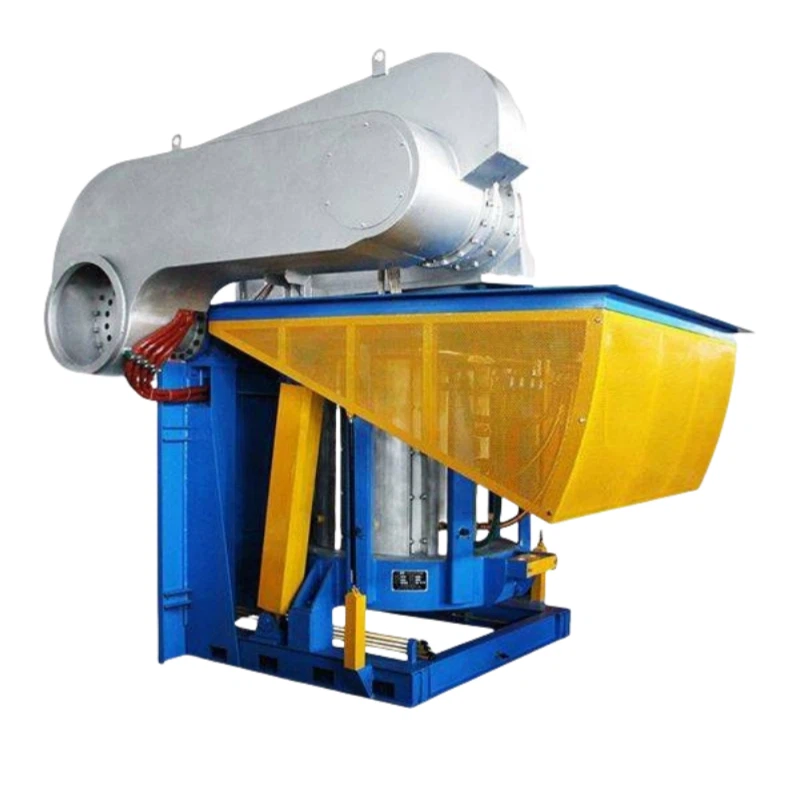


Power Regimes: Flexibility and Energy Efficiency
Induction melting furnaces, such as the induction furnace for melting copper, offer remarkable flexibility, especially for alloying. These furnaces can be easily shut off during downtime, and relining is a quick process. Additionally, induction furnaces, including the induction copper melting furnace, are energy-efficient, consuming less power with a longer refractory lifetime. Their high melting rate enables rapid melting of large quantities of copper, optimizing production.
Reliability: A Solid Investment
When it comes to melting copper, induction furnaces, like the induction furnace for copper melting, outshine other alternatives in terms of reliability. Unlike traditional furnaces, induction furnaces, such as the copper induction furnace, do not require frequent part replacements or repairs. This inherent durability ensures uninterrupted operation, allowing manufacturers to maximize the furnace's performance without unnecessary downtime.
Cleanliness: Promoting a Healthy Environment
Induction copper melting furnaces are renowned for their cleanliness, emitting significantly fewer pollutants compared to other furnace types. By utilizing induction technology, foundries protect their employees from harmful substances and maintain a clean atmosphere, which helps prevent additional oxidation of the copper. The result is not only a safer working environment but also improved product quality.
Energy Efficiency: A Sustainable Solution
Modern induction furnaces, like the induction melting copper furnace, exhibit exceptional electrical efficiency, reducing environmental impact and offering cost savings. By opting for induction furnaces, such as the induction furnace for melting copper, foundries contribute to sustainable practices while ensuring optimal productivity.
Applications of Induction Furnaces for Copper Melting
Induction furnaces have a wide range of applications in various industries. Here are some key areas where induction furnaces are utilized for copper melting:
- Copper foundries and metal casting industries: These facilities rely on induction furnaces for a diverse range of copper-based applications. Foundries and metal casting operations use induction furnaces to produce copper pipes, wires, rods, and various copper alloy components.
- Recycling and scrap metal processing: Induction furnaces, such as the induction copper melting furnace, play a vital role in recycling practices and scrap metal processing. By efficiently melting down copper scrap and other metal materials, induction furnaces enable the extraction of valuable copper. This contributes to sustainable practices by reducing waste and conserving natural resources.
- Advancements and innovations in induction furnace technology: Continuous research and development efforts drive advancements and innovations in induction furnace technology. These enhancements encompass design improvements, control systems, and the use of advanced materials. As a result, induction furnaces are becoming more efficient, reliable, and versatile for various copper melting applications.
In high-temperature applications, it is crucial to have adequate thermal insulation and fire-resistant materials. Fiberglass is one such material that can offer both of those properties and many others.
Comprising glass fibers, silica sand, and plastic, fiberglass is a versatile material that can be knitted or woven into a wide range of forms that resist heat and prevent fire from spreading. Moving forward, we will look at what makes fiberglass so resistant and the applications it benefits.
The properties of fiberglass are outstanding, which is why it is reliably used in high-temperature applications. The glass fibers used to make this product are woven into a design that traps pockets of air, and both glass and plastic polymers are fire-resistant materials. As a result, they offer high thermal insulation and tensile strength, among other properties.
Fiberglass can withstand high temperatures, with its average melting point being 540oC.. Another crucial property of fiberglass is its fire resistance. It will not catch fire and prevent fire from traveling through it, reducing the spread.
Aside from its heat resistance, fiberglass fabrics also offer abrasion and chemical resistance, high dimensional stability, low smoke emission, and outstanding strength. Due to these properties, it is a reliable material used in insulating and high-heat applications.
What are the key applications of fiberglass?
Fiberglass can also be manufactured for a wide range of applications, as the discontinuous (short) fibers used in its production are ideal for sound absorption and thermal insulation. Some of the everyday purposes of fiberglass include the following:
- Draw cords for insulation blankets and other products
- Electrical insulation
- Engine exhaust covers
- Furnace seals
- Gaskets
- Heat-resistant fabric, ropes, sleeving, and tapes
- Oven and door seals
- Removable insulation blankets and pads
- Thermal barriers and insulation
- Fiberglass properties can be enhanced further with high operating temperatures in various configurations when manufactured with specific substrates.
What Is the Function of Induction Melting Furnace Yoke?
The profiling yoke is built in the induction melting furnace body. The yoke shielding can reduce the magnetic flux leakage, prevent the furnace body from heating and improve the efficiency. At the same time, the magnetic yoke can support and fix the induction coil, so that the furnace body can achieve high strength and low noise. The yoke is a crescent shaped yoke made of cold-rolled silicon steel sheet and stainless steel splint. The joint surface of the iron core and the coil is a circular arc surface, and the pressing place is a surface rather than a line in the past. This structure has good pressing effect and less magnetic leakage. After the silicon steel sheet is stacked, it is tightened with special splint instead of special through screw. This structure can make full use of the magnetic conductive area of silicon steel sheet and reduce the possibility of local heating of induction furnace body.
What's the Difference Between Steel Shell Furnace and Aluminum Shell Furnace?
Steel shell furnaces and aluminum shell furnaces are both types of industrial furnaces commonly used in the melting and smelting of various metals. The main differences between them are related to their construction materials, properties, and uses.
The primary difference between steel shell furnaces and aluminum shell furnaces is the material used to construct their shells. Steel shell furnaces have an outer shell made of steel, while aluminum shell furnaces have an outer shell made of aluminum.
Steel shell furnaces are typically made with a steel shell structure that provides durability and resistance to extreme temperatures and thermal stress. They are commonly used in heavy-duty applications such as steel-making, casting, and forging, where high temperatures and heavy loads are required. Steel shell furnaces can also be designed to operate with various types of fuel systems, such as gas, coal, or oil.
Aluminum shell furnaces, on the other hand, are typically made with an aluminum shell structure that provides lightweight, energy-efficient, and non-corrosive properties.
Another factor to consider is the cost of the furnace. Steel shell furnaces are generally more expensive to manufacture and operate than aluminum shell furnaces, due to the higher cost of steel and the heavier construction required. Aluminum shell furnaces are typically less expensive to manufacture and operate, which makes them a cost-effective choice for many applications.
In summary, the main difference between steel shell furnaces and aluminum shell furnaces is the type of construction material used, which leads to differences in their properties and intended uses. Steel shell furnaces are heavy-duty and can handle high temperatures and heavy loads, while aluminum shell furnaces are lightweight, energy-efficient, and ideal for precise temperature control and quick startups.
Our Factory
Shandong Hexinda Electric Furnace Co., Ltd. was established in 2014. After 10 years of development, the company has become a production-oriented company that integrates research and development, production, sales, and after-sales service, and has passed ISO9001 quality system certification. We produce a complete set of equipment, induction power supply, furnace body, and cooler for 100kw-20000kw medium frequency induction melting furnaces and induction heating furnaces, which can meet the casting, forging, and heat treatment needs of metals in different fields. The company not only has industry-leading technological level, but also has a complete pre-sales and after-sales service process.

FAQ
We're well-known as one of the leading accessories for induction furnaces manufacturers and suppliers in China. If you're going to buy customized accessories for induction furnaces, welcome to get more information from our factory.
glass fiber insulation rod, electric furnace reducer, accessories for induction tempering and quenching furnaces