

Hey there! As an induction heating capacitor supplier, I've seen a lot of folks scratching their heads over the differences between using these capacitors in single - phase and three - phase induction heating systems. So, I thought I'd break it down in a simple way to help you make the right choice for your needs.
Let's start with the basics. Induction heating is a process that uses electromagnetic induction to heat an electrically conductive object. Capacitors play a crucial role in this process by helping to create the right electrical conditions for efficient heating. They store and release electrical energy, which is essential for maintaining the proper current and voltage levels in the induction heating circuit.
Single - Phase Induction Heating Systems
Single - phase systems are commonly used in smaller applications where the power requirements are relatively low. They're simpler and more cost - effective to set up, making them a popular choice for home workshops, small - scale manufacturing, and some laboratory setups.
In a single - phase induction heating system, the capacitor is used to tune the resonant circuit. The resonant frequency of the circuit is determined by the values of the inductor (usually the induction coil) and the capacitor. By carefully selecting the capacitor, we can ensure that the circuit operates at the optimal frequency for efficient heating.
One of the main advantages of using a capacitor in a single - phase system is that it can improve the power factor. The power factor is a measure of how effectively electrical power is being used. A low power factor means that a significant amount of electrical energy is being wasted. By adding a capacitor to the circuit, we can bring the power factor closer to 1, which reduces energy consumption and saves money on electricity bills.
However, single - phase systems also have their limitations. They can only provide a limited amount of power, typically up to a few kilowatts. This is because the single - phase power supply has a sinusoidal voltage waveform that has zero crossings, which can cause fluctuations in the heating process. As a result, single - phase systems may not be suitable for large - scale industrial applications that require high - power and continuous heating.
Three - Phase Induction Heating Systems
Three - phase systems, on the other hand, are designed for high - power applications. They're commonly used in industries such as metal melting, forging, and heat treatment. Three - phase power supplies provide a more stable and continuous power source compared to single - phase supplies.
In a three - phase induction heating system, the capacitor configuration is more complex. There are usually multiple capacitors connected in a specific way to form a resonant circuit. The three - phase power supply has three voltage waveforms that are 120 degrees out of phase with each other. This allows for a more uniform distribution of power and a smoother heating process.
One of the key differences in using a capacitor in a three - phase system is the need for better voltage balancing. Since the three - phase power supply has three separate phases, it's important to ensure that the voltage across each capacitor is balanced. This helps to prevent over - voltage or under - voltage conditions, which can damage the capacitors and other components in the circuit.
Another advantage of three - phase systems is their ability to handle higher power levels. By using multiple capacitors and a three - phase power supply, these systems can provide power in the range of tens to hundreds of kilowatts or even more. This makes them ideal for large - scale industrial applications where high - power and continuous heating are required.
Capacitor Selection for Single - Phase and Three - Phase Systems
When it comes to selecting the right capacitor for your induction heating system, there are several factors to consider.
For single - phase systems, the capacitance value is usually determined by the resonant frequency requirements of the circuit. You'll also need to consider the voltage rating of the capacitor. The voltage rating should be high enough to withstand the maximum voltage that will be applied to the capacitor during operation. Additionally, the capacitor should have a low equivalent series resistance (ESR) to minimize power losses.
In three - phase systems, in addition to the capacitance value and voltage rating, you also need to pay attention to the capacitor's phase balance. Capacitors with good phase balance characteristics are essential for ensuring the proper operation of the three - phase resonant circuit. You may also need to use capacitors with higher current ratings to handle the increased power levels.
Accessories for Induction Heating Systems
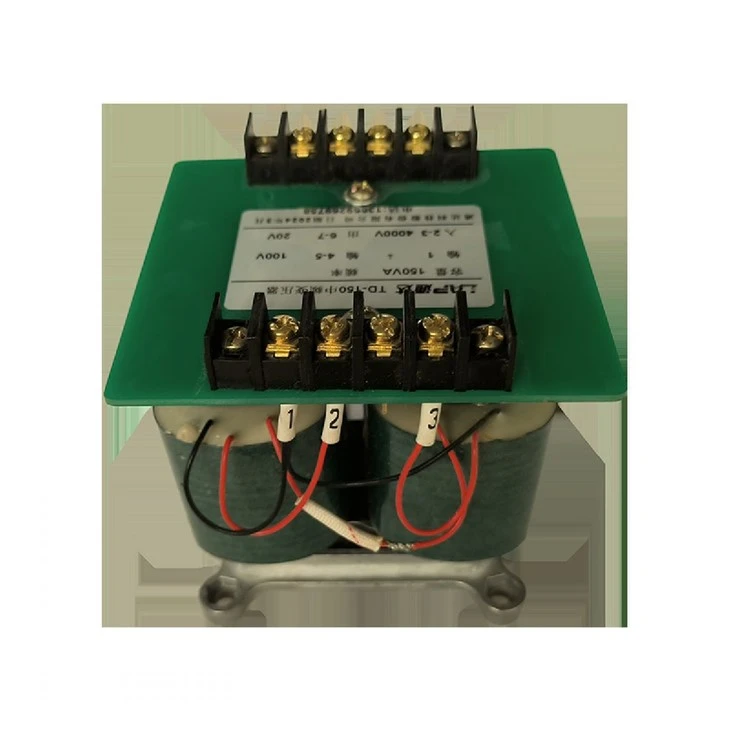
Along with the induction heating capacitors, there are several other accessories that are important for the proper operation of induction heating systems. For example, a Transformer for Intermediate Frequency Furnace is used to step up or step down the voltage of the power supply to the appropriate level for the induction heating circuit. A Water Cooled Cable For Furnace is used to carry the high - current electrical power from the power supply to the induction coil. And a Current Transformer is used to measure the current flowing through the circuit.
Conclusion
In conclusion, the main differences in using an induction heating capacitor in a single - phase and three - phase induction heating system lie in the power requirements, circuit complexity, and capacitor selection criteria. Single - phase systems are suitable for small - scale applications where simplicity and cost - effectiveness are important. Three - phase systems, on the other hand, are designed for high - power industrial applications that require a more stable and continuous power source.
If you're in the market for induction heating capacitors or any of the related accessories, I'd love to have a chat with you. Whether you're setting up a new induction heating system or looking to upgrade an existing one, I can help you choose the right components for your specific needs. Just reach out, and we can start the conversation about how to make your induction heating process more efficient and cost - effective.

References
- "Induction Heating Handbook" by John D. Douglass
- "Power Electronics: Converters, Applications, and Design" by Ned Mohan, Tore M. Undeland, and William P. Robbins