

What is the Dew - point Temperature in Relation to Closed Circuit Fluid Coolers?
As a supplier of closed circuit fluid coolers, I've often encountered questions about the relationship between dew - point temperature and our products. In this blog, I'll delve into the concept of dew - point temperature and explain how it impacts the operation and performance of closed circuit fluid coolers.
Understanding Dew - point Temperature
The dew - point temperature is a fundamental meteorological concept. It represents the temperature at which air becomes saturated with water vapor, causing the water vapor to condense into liquid water. In simpler terms, when the air cools to its dew - point temperature, dew forms. This occurs because cooler air can hold less water vapor than warmer air.
Mathematically, the dew - point temperature is related to the relative humidity and the actual amount of water vapor in the air. If the relative humidity is 100%, the air temperature is equal to the dew - point temperature. As the relative humidity decreases, the dew - point temperature is lower than the air temperature.
Closed Circuit Fluid Coolers: An Overview
Before we explore the relationship between dew - point temperature and closed circuit fluid coolers, let's briefly understand what these coolers are. Closed circuit fluid coolers, also known as Closed Circuit Fluid Coolers, are heat exchangers that use air and water to cool a fluid (usually water or a water - glycol mixture) in a closed loop.
The basic working principle involves the hot fluid flowing through a series of tubes or coils. Air is drawn over these tubes by fans, and water is sprayed over the tubes to enhance the cooling process. The heat from the fluid is transferred to the water and then to the air, which is then exhausted from the cooler. This closed - loop system ensures that the fluid being cooled remains clean and free from contaminants.
The Impact of Dew - point Temperature on Closed Circuit Fluid Coolers
- Cooling Efficiency
The dew - point temperature plays a crucial role in determining the cooling efficiency of closed circuit fluid coolers. The closer the temperature of the fluid being cooled gets to the dew - point temperature of the surrounding air, the more difficult it becomes to remove additional heat. This is because as the fluid temperature approaches the dew - point, the driving force for heat transfer (the temperature difference between the fluid and the air) decreases.
For example, if the dew - point temperature of the air is 20°C and the fluid temperature is 25°C, there is a relatively large temperature difference, and heat transfer will occur at a reasonable rate. However, if the fluid temperature drops to 21°C, the temperature difference is much smaller, and the cooling rate will slow down significantly.
- Condensation Issues
When the surface temperature of the tubes or coils in the closed circuit fluid cooler drops below the dew - point temperature of the surrounding air, condensation will occur. While a small amount of condensation can be normal and may even aid in the cooling process, excessive condensation can lead to problems.
Condensation can cause corrosion on the metal surfaces of the cooler, reducing its lifespan. It can also lead to the growth of mold and bacteria, which can contaminate the fluid being cooled and pose a risk to the equipment or processes that rely on the cooled fluid.
- Fan and Pump Operation
The dew - point temperature can also affect the operation of the fans and pumps in the closed circuit fluid cooler. In conditions where the air is close to its dew - point, the density of the air changes. This can impact the performance of the fans, as they are designed to move a certain volume of air at a specific density.
Similarly, the pumps that circulate the water in the cooler may need to work harder if the cooling efficiency is reduced due to the proximity of the fluid temperature to the dew - point. This can lead to increased energy consumption and wear and tear on the equipment.
Mitigating the Effects of Dew - point Temperature
- Monitoring and Control
One of the most effective ways to mitigate the effects of dew - point temperature on closed circuit fluid coolers is through continuous monitoring. By regularly measuring the dew - point temperature of the air, as well as the temperature of the fluid being cooled and the surface temperature of the tubes, operators can make informed decisions about the operation of the cooler.
For example, if the surface temperature of the tubes is approaching the dew - point temperature, the flow rate of the water or the speed of the fans can be adjusted to prevent condensation.
-
Insulation and Coatings
Applying insulation to the tubes and coils of the closed circuit fluid cooler can help prevent the surface temperature from dropping below the dew - point temperature. Specialized coatings can also be used to protect the metal surfaces from corrosion caused by condensation. -
Use of Closed Cooler Auxiliary Equipment
There are various auxiliary equipment options available that can help deal with the challenges posed by the dew - point temperature. For instance, dehumidifiers can be used to reduce the humidity of the air entering the cooler, thereby lowering the dew - point temperature.
Dew - point Temperature and Closed Cooling Tower
Closed cooling towers are a type of closed circuit fluid cooler. The same principles regarding dew - point temperature apply to them. In a closed cooling tower, the hot fluid is cooled by a combination of air and water in a closed loop. The dew - point temperature affects the cooling capacity and efficiency of the tower in the same way as it does for other closed circuit fluid coolers.
The design of closed cooling towers often takes into account the potential for condensation and the impact of the dew - point temperature. For example, the tower may be designed with a larger surface area for heat transfer to compensate for the reduced cooling efficiency when the fluid temperature approaches the dew - point.
Conclusion
In conclusion, the dew - point temperature is a critical factor that affects the operation and performance of closed circuit fluid coolers. Understanding this relationship is essential for ensuring the efficient and reliable operation of these coolers. By monitoring the dew - point temperature, taking appropriate mitigation measures, and using the right auxiliary equipment, operators can optimize the performance of their closed circuit fluid coolers and extend their lifespan.

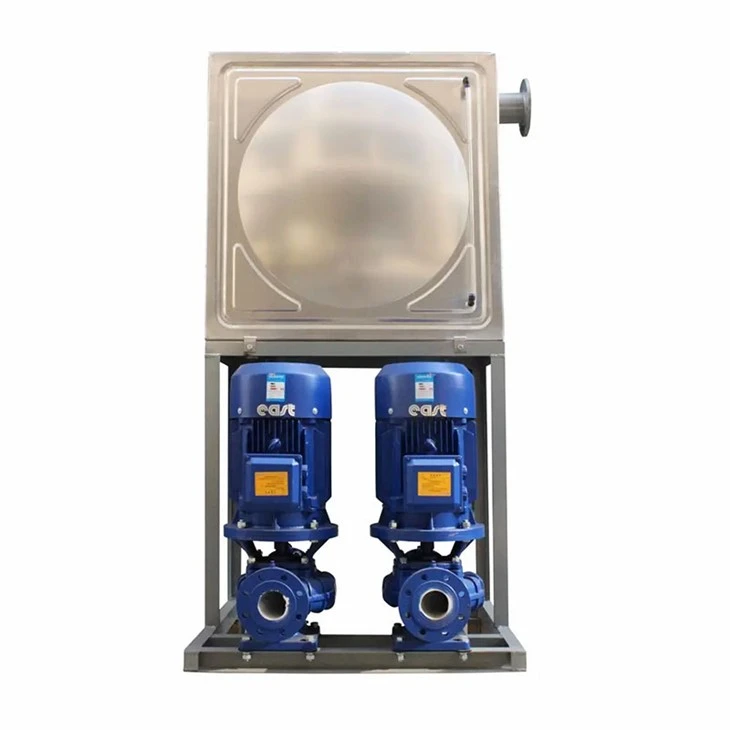
If you're in the market for high - quality closed circuit fluid coolers or need more information on how to manage the impact of dew - point temperature on your cooling systems, I encourage you to reach out for a procurement discussion. We have a team of experts who can provide you with tailored solutions based on your specific requirements.
References
- Incropera, F. P., & DeWitt, D. P. (2002). Fundamentals of Heat and Mass Transfer. Wiley.
- ASHRAE Handbook - Fundamentals. American Society of Heating, Refrigerating and Air - Conditioning Engineers.