

Hey there! As a supplier of IGBT modules, I often get asked about the gate drive voltage requirement for these nifty components. So, I thought I'd sit down and write a blog post to clear up some of the confusion.
First off, let's talk a bit about what IGBT modules are. IGBT stands for Insulated Gate Bipolar Transistor. These modules are a key part of power electronics, used in a wide range of applications like motor drives, renewable energy systems, and even in some consumer electronics. They're great because they combine the high - input impedance of MOSFETs with the low - on - state voltage drop of bipolar transistors, which makes them super efficient for high - power applications.
Now, the gate drive voltage is a crucial factor when it comes to the proper operation of IGBT modules. You see, the gate of an IGBT is like a switch. When you apply the right voltage to the gate, it allows current to flow between the collector and the emitter, turning the IGBT on. And when you remove that voltage, the IGBT turns off.
The typical gate drive voltage requirement for most IGBT modules ranges from around +15V to +20V for turning the IGBT on. This +15V to +20V range is important because it ensures that the IGBT is fully turned on, which means it has a low on - state resistance. When the IGBT is fully on, there's less power loss in the form of heat, and the overall efficiency of the system goes up.
On the other hand, when you want to turn the IGBT off, you usually need to apply a negative gate - to - emitter voltage. A common value for this negative voltage is around -5V to -10V. The negative voltage helps to quickly remove the charge from the gate and ensures that the IGBT turns off rapidly and completely. This is crucial to prevent any unwanted current flow and to avoid issues like cross - conduction in bridge circuits.
But why these specific voltage values? Well, it all boils down to the internal structure of the IGBT. The gate oxide layer in an IGBT has a certain threshold voltage. This is the minimum voltage that you need to apply to the gate to start the conduction process. If the gate drive voltage is too low, the IGBT won't turn on fully, and it'll operate in a high - resistance state, leading to more power dissipation and heat generation.
Conversely, if the gate drive voltage is too high, it can damage the gate oxide layer. The gate oxide is a thin layer of insulating material, and applying excessive voltage can cause it to break down, which is a serious problem as it can permanently damage the IGBT module.
When selecting a gate driver for your IGBT module, you also need to consider other factors apart from just the voltage levels. For example, the gate driver should be able to supply enough current to charge and discharge the gate capacitance of the IGBT quickly. A slow charging or discharging of the gate can lead to longer switching times, which again increases power losses.
In addition to the standard gate drive voltage requirements, some advanced IGBT modules may have different specifications. For instance, there are high - voltage IGBTs used in ultra - high - power applications. These might require slightly different gate drive voltages to ensure optimal performance.

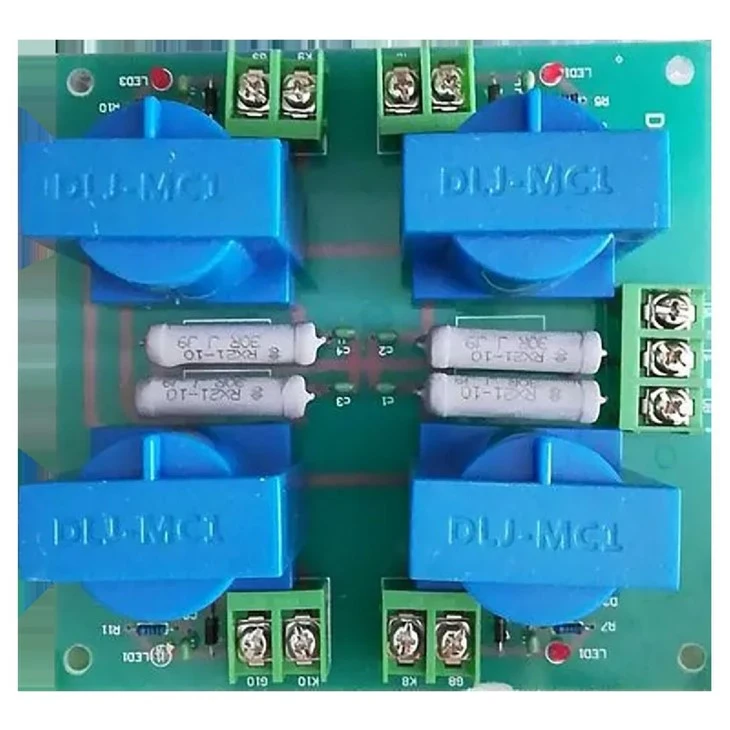
As a supplier of IGBT modules, we offer a wide range of products to suit different applications. And if you're in the market for accessories for your induction power supply, we've got you covered. You can check out our Stainless Steel Water Distributor, which is a great addition to your system for efficient water distribution. Also, take a look at our Intelligent Universal Circuit Breaker for reliable circuit protection. And for those looking for components for their furnace systems, our Furnace Pulse Transformer Board is a top - notch choice.
If you're interested in learning more about our IGBT modules or have any questions regarding the gate drive voltage requirements, don't hesitate to reach out. Whether you're a small - scale hobbyist or a large - scale industrial user, we're here to help you find the right solutions for your power electronics needs. Contact us for a detailed discussion about your requirements and let's start a great partnership.
References
- Mohan, N., Undeland, T. M., & Robbins, W. P. (2012). Power Electronics: Converters, Applications, and Design. Wiley.
- Nasar, S. A., & Boldea, I. (1996). Electric Machines and Drives: A First Course. Prentice Hall.