

Hey there! As a supplier of induction heating capacitors, I often get asked about various technical aspects of these components. One question that comes up quite a bit is, "What is the insulation resistance of an induction heating capacitor?" In this blog, I'll break down what insulation resistance is, why it's important for induction heating capacitors, and how it can impact the performance of your equipment.
What is Insulation Resistance?
Let's start with the basics. Insulation resistance is a measure of how well an insulating material resists the flow of electric current. In the context of an induction heating capacitor, the insulation is the material that separates the conductive plates inside the capacitor. This insulation is crucial because it prevents the capacitor from short - circuiting and ensures that the electrical energy is stored and released in a controlled manner.
Insulation resistance is measured in ohms (Ω). A high insulation resistance value means that the insulation is doing a great job of blocking the flow of current, while a low value indicates that there might be some issues with the insulation. For example, if moisture gets into the capacitor or if the insulation material has been damaged, the insulation resistance will decrease.
Why is Insulation Resistance Important for Induction Heating Capacitors?
In induction heating systems, capacitors play a vital role. They are used to store and release electrical energy at high frequencies, which is essential for generating the magnetic fields needed to heat the metal. A capacitor with good insulation resistance is key to the overall performance and safety of the induction heating system.
First off, a high insulation resistance helps to prevent electrical leakage. Electrical leakage can lead to power losses, which means that your induction heating system will be less efficient. You'll end up using more energy to achieve the same level of heating, which can increase your operating costs.
Secondly, proper insulation resistance is crucial for safety. If the insulation resistance is too low, there's a risk of electric shock to the operators. Also, electrical arcing can occur, which can damage the capacitor and other components in the induction heating system. This can lead to costly repairs and downtime for your production.
Measuring the Insulation Resistance of an Induction Heating Capacitor
So, how do you measure the insulation resistance of an induction heating capacitor? Well, you'll need a specialized instrument called a megohmmeter, also known as a megger. A megger works by applying a high - voltage DC signal to the capacitor and measuring the resulting current. Using Ohm's law (R = V/I), the insulation resistance can be calculated.
Before you start measuring, make sure that the capacitor is fully discharged. This is important because a charged capacitor can damage the megger and pose a safety risk to you. Once the capacitor is discharged, connect the megger to the capacitor terminals according to the manufacturer's instructions. Then, apply the test voltage and wait for the reading to stabilize.
It's important to note that the insulation resistance can vary depending on factors such as temperature and humidity. Generally, the insulation resistance will decrease as the temperature increases. So, when you're taking measurements, make sure to note down the temperature and humidity conditions. This will help you to interpret the results accurately.
Factors Affecting the Insulation Resistance of Induction Heating Capacitors
There are several factors that can affect the insulation resistance of an induction heating capacitor.
Temperature: As mentioned earlier, temperature has a significant impact on insulation resistance. At higher temperatures, the molecules in the insulation material have more energy and are more likely to move around. This makes it easier for the electric current to flow through the insulation, resulting in a lower insulation resistance.
Humidity: Moisture is the enemy of insulation. When moisture gets into the capacitor, it can form conductive paths through the insulation material, reducing the insulation resistance. That's why it's important to keep induction heating capacitors in a dry environment.
Age and Usage: Over time, the insulation material in a capacitor can degrade due to factors such as electrical stress and mechanical vibrations. This can lead to a decrease in insulation resistance. If a capacitor has been used in a high - stress environment, it's more likely to experience insulation degradation.
Maintaining Good Insulation Resistance
To ensure that your induction heating capacitors have good insulation resistance, regular maintenance is essential.
Visual Inspection: Periodically inspect the capacitors for any signs of physical damage, such as cracks or bulges. If you notice any damage, replace the capacitor immediately.
Cleaning: Keep the capacitors clean and free from dust and debris. Dust can absorb moisture, which can lead to a decrease in insulation resistance. You can use a dry, soft brush to clean the capacitor terminals and surfaces.
Environmental Control: Try to maintain a stable environment for your induction heating capacitors. Keep the temperature and humidity within the recommended range specified by the capacitor manufacturer.
Related Accessories for Induction Heating Systems
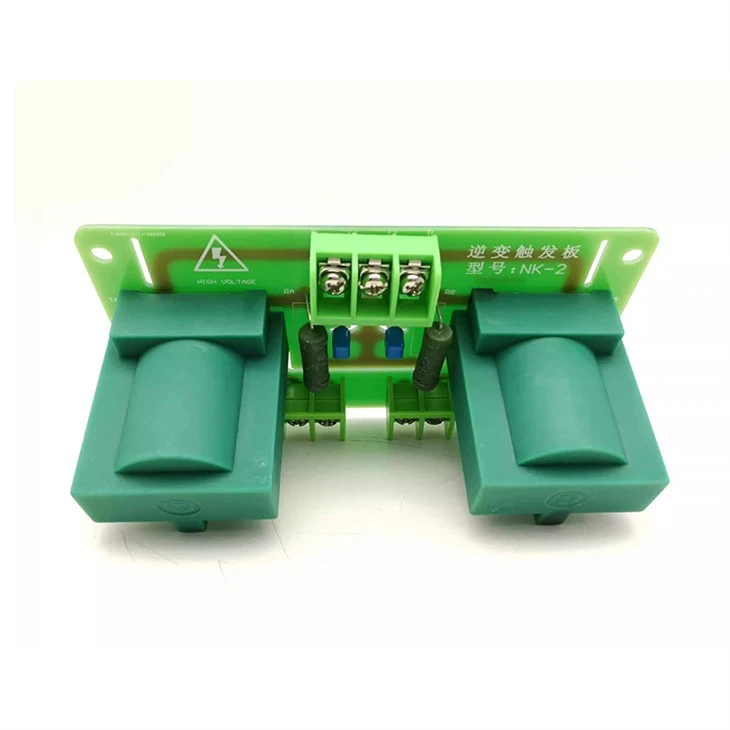
If you're in the market for accessories to complement your induction heating system, we've got some great options. Check out the Intelligent Universal Circuit Breaker, which can help to protect your system from over - current and short - circuit conditions. The Evaluation Board for IGBT Module is also a useful tool for testing and evaluating the performance of your IGBT modules. And don't forget the Furnace Pulse Transformer Board, which plays a crucial role in the operation of induction furnaces.

Conclusion
In conclusion, the insulation resistance of an induction heating capacitor is a critical parameter that affects the performance and safety of your induction heating system. By understanding what insulation resistance is, why it's important, and how to measure and maintain it, you can ensure that your induction heating capacitors work efficiently and safely.
If you're interested in purchasing high - quality induction heating capacitors or need more information about insulation resistance and other technical aspects, don't hesitate to get in touch. We're here to help you find the right solutions for your induction heating needs.
References
- Grover, F. W. (1946). Inductance Calculations: Working Formulas and Tables. Dover Publications.
- Dorf, R. C., & Svoboda, J. A. (2014). Introduction to Electric Circuits. Wiley.
- Chapman, S. J. (2012). Electric Machinery Fundamentals. McGraw - Hill.