

As a seasoned supplier of control transformers, I often encounter inquiries from customers about various technical aspects of these essential electrical devices. One question that frequently comes up is, "What is the no - load loss of a control transformer?" In this blog post, I will delve into this topic, explaining what no - load loss is, its significance, and how it impacts the performance and cost - effectiveness of control transformers.
Understanding Control Transformers
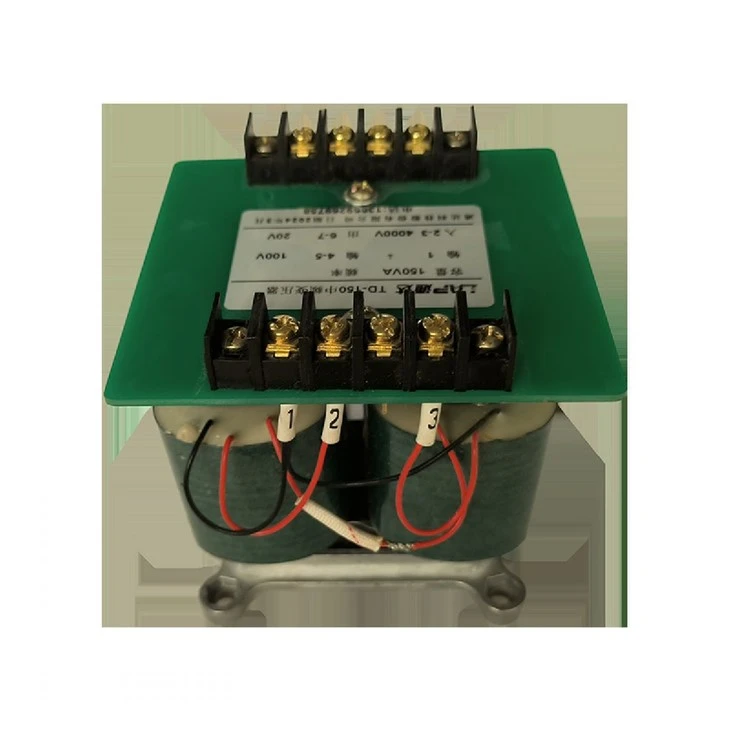
Before we dive into the concept of no - load loss, let's briefly understand what a control transformer is. Control transformers are designed to provide a stable and reliable source of power for control circuits in electrical systems. They are commonly used in industrial machinery, automation systems, and other applications where precise control of electrical equipment is required. These transformers step down the voltage from the primary power source to a lower, more suitable level for the control devices.
Defining No - Load Loss
No - load loss, also known as iron loss or core loss, occurs in a transformer even when there is no load connected to its secondary winding. It is primarily caused by two factors: hysteresis loss and eddy current loss.
Hysteresis Loss
Hysteresis loss is a result of the magnetic properties of the transformer's core material. When an alternating current passes through the primary winding, it creates a changing magnetic field in the core. The core material has to continuously realign its magnetic domains with the changing magnetic field. This realignment process dissipates energy in the form of heat, which is the hysteresis loss. The amount of hysteresis loss depends on the type of core material, the frequency of the alternating current, and the maximum magnetic flux density.
Eddy Current Loss
Eddy current loss is caused by the induced currents in the core of the transformer. When the magnetic field in the core changes, it induces small circulating currents, known as eddy currents, in the core material. These eddy currents flow through the resistance of the core, generating heat and causing power loss. To reduce eddy current loss, the transformer core is usually made of laminated sheets of magnetic material, which increase the resistance to the flow of eddy currents.
Significance of No - Load Loss
The no - load loss of a control transformer is an important parameter for several reasons.
Energy Efficiency
No - load loss represents a continuous energy consumption even when the transformer is not supplying power to a load. In applications where transformers are constantly energized, such as in industrial plants operating 24/7, the cumulative no - load loss can be significant. A transformer with lower no - load loss is more energy - efficient, which can lead to substantial cost savings in the long run.

Heat Generation
The heat generated by no - load loss can affect the temperature of the transformer. Excessive heat can reduce the lifespan of the transformer's insulation materials and other components, leading to premature failure. Therefore, minimizing no - load loss is crucial for maintaining the reliability and durability of the transformer.
System Performance
High no - load loss can also have an impact on the overall performance of the electrical system. It can cause voltage fluctuations and power factor degradation, which can affect the operation of other electrical devices connected to the same system.
Measuring No - Load Loss
The no - load loss of a control transformer is typically measured using a wattmeter. The primary winding of the transformer is connected to the rated voltage source, and the secondary winding is left open - circuited. The wattmeter measures the power consumed by the transformer under these no - load conditions. The measured value is expressed in watts (W).
Factors Affecting No - Load Loss
Several factors can influence the no - load loss of a control transformer.
Core Material
The choice of core material has a significant impact on no - load loss. High - quality magnetic materials, such as grain - oriented silicon steel, have lower hysteresis and eddy current losses compared to other materials. Transformers with cores made of these advanced materials generally have lower no - load losses.
Core Design
The design of the transformer core, including the shape, size, and lamination thickness, can also affect no - load loss. Optimized core designs can reduce the magnetic path length and the amount of core material, thereby minimizing hysteresis and eddy current losses.
Operating Frequency
The frequency of the alternating current supplied to the transformer affects the no - load loss. Higher frequencies generally result in higher hysteresis and eddy current losses. Therefore, transformers designed for higher frequencies need to be carefully engineered to minimize no - load loss.
Our Control Transformers and No - Load Loss
As a control transformer supplier, we understand the importance of minimizing no - load loss in our products. We use high - quality core materials and advanced manufacturing techniques to ensure that our control transformers have low no - load losses. Our transformers are designed to meet or exceed industry standards for energy efficiency, providing our customers with reliable and cost - effective solutions.
In addition to control transformers, we also offer a range of related products, such as Transformer for Intermediate Frequency Furnace, IGBT Medium Frequency Power Supply, and Water Cooled Cable For Furnace. These products are designed to work together seamlessly, providing comprehensive solutions for various industrial applications.
Contact Us for Purchase and Consultation
If you are in the market for high - quality control transformers or any of our other products, we invite you to contact us. Our team of experts is ready to assist you in selecting the right products for your specific needs. We can provide detailed technical information, product specifications, and pricing details. Whether you are a small business or a large industrial enterprise, we have the products and expertise to meet your requirements.
References
- "Transformer Engineering: Design, Technology, and Diagnostics" by Badri Ram.
- "Electric Machinery Fundamentals" by Stephen J. Chapman.
- Industry standards and technical documents related to control transformers.