

Hey there! I'm a supplier of induction furnace power supplies, and today I wanna chat about whether an induction furnace power supply can be used for different metals. It's a question I get asked a lot, so let's dig into it.
First off, let's understand how an induction furnace power supply works. An induction furnace uses electromagnetic induction to heat and melt metals. The power supply sends an alternating current through a coil, creating a magnetic field. When a metal is placed inside the coil, the magnetic field induces electrical currents in the metal, which generate heat due to the electrical resistance of the metal. This process is super efficient and can heat metals to very high temperatures quickly.
Now, the big question: Can one induction furnace power supply handle different metals? The short answer is yes, but there are some things to consider.
Factors Affecting Compatibility
1. Melting Point
Different metals have different melting points. For example, aluminum has a melting point of around 660°C, while steel can have a melting point ranging from 1370°C to 1530°C. A power supply needs to be able to generate enough heat to reach the melting point of the metal you're working with. So, if you're planning to melt both aluminum and steel, you'll need a power supply that can handle the higher temperatures required for steel.
2. Electrical Conductivity
Metals also vary in their electrical conductivity. Copper is a highly conductive metal, while stainless steel has relatively lower conductivity. The electrical conductivity affects how easily the metal can generate heat in an induction furnace. A power supply needs to be adjusted to account for these differences. For metals with lower conductivity, the power supply may need to provide a higher current to achieve the same heating effect.

3. Magnetic Properties
Some metals are ferromagnetic, like iron and nickel, while others are non - ferromagnetic, such as aluminum and copper. Ferromagnetic metals can be heated more efficiently in an induction furnace because the magnetic field interacts more strongly with them. Non - ferromagnetic metals still can be heated, but the power supply may need to be optimized differently.
Types of Induction Furnace Power Supplies
There are different types of induction furnace power supplies, and each has its own capabilities when it comes to handling different metals.
Thyristor Induction Furnace Power Supply
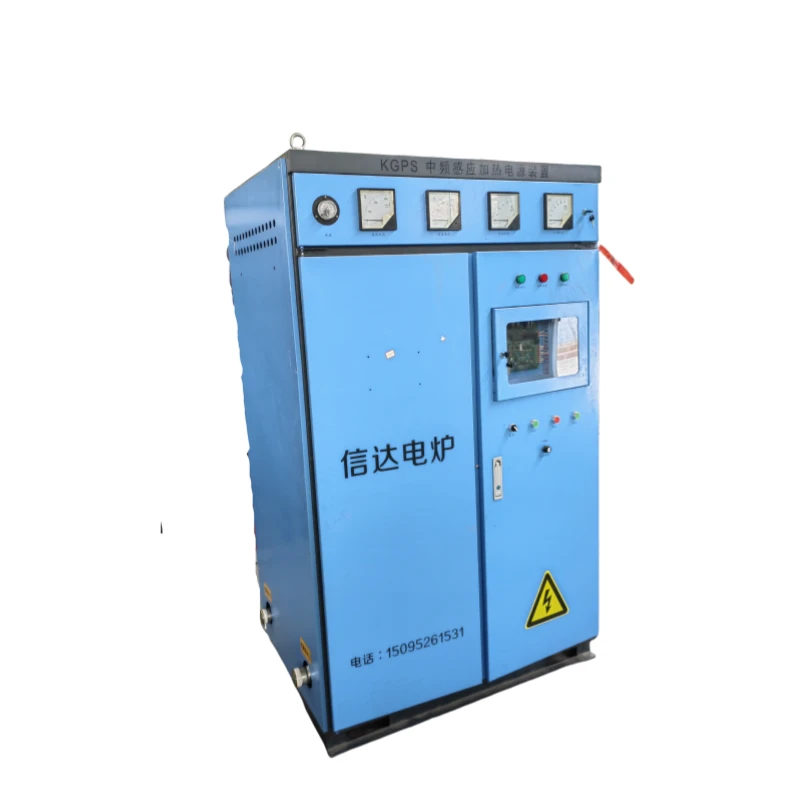
A Thyristor Induction Furnace Power Supply is a popular choice. It's known for its reliability and ability to handle a wide range of power requirements. These power supplies can be adjusted to work with different metals by changing the frequency and power output. For example, when melting a metal with a high melting point like steel, the power supply can be set to a higher power output and an appropriate frequency to ensure efficient heating.
Thyristor Parallel Resonant Melting Furnace
The Thyristor Parallel Resonant Melting Furnace is another option. It offers high efficiency and can be used for both small - scale and large - scale metal melting operations. This type of furnace can be adjusted to work with different metals by fine - tuning the resonant frequency. The resonant frequency affects how the magnetic field interacts with the metal, and by adjusting it, you can optimize the heating process for different metals.
Intermediate Frequency Capacitor
The Intermediate Frequency Capacitor plays a crucial role in an induction furnace power supply. It helps to control the power factor and the frequency of the electrical current. By using different capacitors, you can adjust the power supply to work more effectively with different metals. For example, for a metal with lower electrical conductivity, a capacitor with specific characteristics can be used to increase the current and improve the heating efficiency.
Advantages of Using One Power Supply for Different Metals
Cost - Efficiency
Investing in a single power supply that can handle multiple metals can save you a lot of money. You don't have to buy separate power supplies for each type of metal you work with. This reduces the initial investment cost and also lowers the maintenance and operating costs.
Space - Saving
Having one power supply means you need less space in your workshop. You don't have to set up multiple power supply units, which can be especially beneficial if you have limited space.
Flexibility
With a single power supply that can handle different metals, you have the flexibility to switch between different metal melting jobs quickly. This allows you to respond to changing customer demands and market trends more easily.
Challenges and Solutions
Calibration
One of the main challenges is calibrating the power supply for different metals. You need to ensure that the power output, frequency, and other parameters are set correctly for each metal. This may require some trial and error, but most modern power supplies come with advanced control systems that make the calibration process easier.
Wear and Tear
Using a power supply for different metals can also lead to more wear and tear on the equipment. Different metals may have different chemical and physical properties that can affect the components of the power supply. Regular maintenance and inspection can help to identify and address any potential issues before they become major problems.
Conclusion
So, to sum it up, an induction furnace power supply can be used for different metals, but it requires careful consideration of factors like melting point, electrical conductivity, and magnetic properties. There are different types of power supplies available, such as Thyristor Induction Furnace Power Supply, Thyristor Parallel Resonant Melting Furnace, and those with Intermediate Frequency Capacitor, which can be adjusted to work with a variety of metals.
If you're in the market for an induction furnace power supply that can handle different metals, I'd be more than happy to assist you. We have a wide range of high - quality power supplies that are designed to be versatile and efficient. Whether you're a small - scale metalworker or a large - scale industrial operation, we can find the right solution for you. Don't hesitate to reach out for a consultation and let's start a conversation about your specific needs.
References
- ASM Handbook, Volume 1: Properties and Selection: Irons, Steels, and High - Performance Alloys
- Induction Heating Handbook by John D. Douglas
- Principles of Induction Heating by V. V. Ryabov