

Selecting the right induction heating capacitor for an induction heating machine is a critical decision that can significantly impact the performance, efficiency, and longevity of the equipment. As a trusted induction heating capacitor supplier, I understand the complexities involved in this process and am here to guide you through the key considerations.
Understanding Induction Heating Capacitors
Induction heating capacitors play a vital role in the operation of induction heating machines. They are used to store and release electrical energy, working in conjunction with the induction coil to generate the high - frequency magnetic field necessary for heating the workpiece. The capacitor helps to tune the resonant circuit of the induction heating system, ensuring maximum power transfer and efficient operation.
Key Factors in Choosing the Right Capacitor
1. Capacitance Value
The capacitance value is one of the most important parameters to consider. It determines the resonant frequency of the induction heating circuit. The resonant frequency is given by the formula (f = \frac{1}{2\pi\sqrt{LC}}), where (L) is the inductance of the induction coil and (C) is the capacitance of the capacitor. You need to select a capacitor with a capacitance value that allows the system to operate at the desired resonant frequency. For example, if your induction heating process requires a high - frequency operation, a lower capacitance value may be needed, and vice versa.

2. Voltage Rating
The voltage rating of the capacitor must be carefully chosen to withstand the maximum voltage that will be applied across it during operation. Exceeding the voltage rating can lead to capacitor failure, which can cause damage to the induction heating machine and pose safety risks. Consider the peak voltage in the circuit, including any voltage spikes that may occur due to switching or other transient events. A capacitor with a higher voltage rating provides a safety margin and ensures reliable operation.
3. Current Rating
The current rating of the capacitor is also crucial. It indicates the maximum amount of current that the capacitor can carry without overheating or suffering from excessive power losses. In an induction heating system, the capacitor experiences high - frequency currents. A capacitor with an insufficient current rating may overheat, leading to a reduction in its lifespan and potentially causing system malfunctions. Calculate the expected current in the circuit based on the power requirements of the induction heating process and select a capacitor with an appropriate current rating.
4. Frequency Response
Induction heating systems operate at various frequencies, ranging from a few kilohertz to several megahertz. The capacitor should have a good frequency response within the operating frequency range of the system. Capacitors with a wide frequency response can maintain stable performance and minimize losses at different frequencies. Some capacitors are specifically designed for high - frequency applications, while others are more suitable for low - frequency operation. Make sure to choose a capacitor that matches the frequency requirements of your induction heating machine.
5. Temperature Stability
During the operation of an induction heating machine, the capacitor can generate heat due to power losses. Therefore, it is essential to select a capacitor with good temperature stability. Capacitors with a low temperature coefficient of capacitance (TCC) can maintain their capacitance value within a narrow range over a wide temperature range. This ensures that the resonant frequency of the circuit remains stable, even as the temperature changes. High - quality capacitors are often designed with materials and construction techniques that enhance their temperature stability.
6. Dielectric Material
The dielectric material used in the capacitor affects its performance, reliability, and cost. Different dielectric materials have different properties, such as dielectric constant, loss tangent, and breakdown voltage. For example, polypropylene is a commonly used dielectric material in induction heating capacitors due to its low loss tangent, high dielectric strength, and good self - healing properties. Other dielectric materials like ceramic and mica also have their own advantages and are used in specific applications. Consider the requirements of your induction heating process and choose a capacitor with a suitable dielectric material.
Compatibility with Other Components
When choosing an induction heating capacitor, it is important to consider its compatibility with other components in the system. For example, the capacitor should be compatible with the induction coil in terms of the resonant frequency and power handling capabilities. It should also work well with the power supply and other control components.
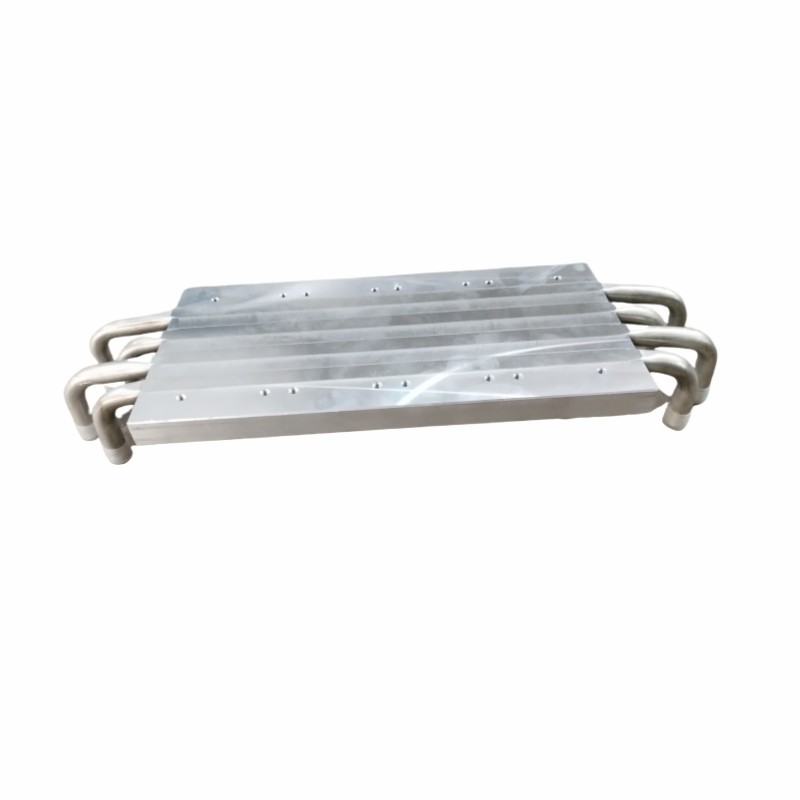
In addition, you may need to consider the availability of accessories that can enhance the performance of the capacitor and the overall induction heating system. For instance, Water Cooling Plate for IGBT Modules can be used to cool the IGBT modules in the power supply, which in turn can improve the efficiency and reliability of the entire system. Current Transformer can be used to measure the current in the circuit accurately, allowing for better control of the induction heating process. Stainless Steel Water Distributor can ensure uniform water distribution for cooling purposes.
Quality and Reliability
As an induction heating capacitor supplier, I emphasize the importance of quality and reliability. High - quality capacitors are manufactured using strict quality control processes and high - grade materials. They are tested thoroughly to ensure that they meet the specified performance parameters. A reliable capacitor can reduce the risk of system downtime and maintenance costs. Look for capacitors that are certified to international standards, such as ISO and CE, which indicate that they have been manufactured and tested to meet certain quality and safety requirements.
Cost - Effectiveness
While quality and performance are important, cost - effectiveness is also a consideration. You need to balance the cost of the capacitor with its performance and reliability. Sometimes, a slightly more expensive capacitor may offer better long - term value due to its higher quality and longer lifespan. Consider the total cost of ownership, including the initial purchase price, maintenance costs, and the cost of potential downtime due to capacitor failure.
Conclusion
Choosing the right induction heating capacitor for an induction heating machine is a complex process that requires careful consideration of multiple factors. By taking into account the capacitance value, voltage rating, current rating, frequency response, temperature stability, dielectric material, compatibility with other components, quality, reliability, and cost - effectiveness, you can select a capacitor that meets the specific requirements of your induction heating process.
As a professional induction heating capacitor supplier, I am committed to providing high - quality capacitors and expert advice to help you make the best choice. If you are in the process of selecting an induction heating capacitor or have any questions about induction heating systems, I encourage you to contact me for further discussion and procurement negotiation.
References
- "Handbook of Induction Heating" by Avner E. Rozenberg
- "Power Electronics: Converters, Applications, and Design" by Ned Mohan, Tore M. Undeland, and William P. Robbins
- Technical documents from major capacitor manufacturers.