

Hey there! As a supplier of IGBT modules, I often get asked about how to match these modules with the load. It's a crucial topic, and getting it right can make a huge difference in the performance and longevity of your system. So, let's dive into it!
Understanding the Basics
First off, let's talk about what an IGBT module is. An Insulated Gate Bipolar Transistor (IGBT) module is a key component in many power electronics applications. It combines the advantages of MOSFETs (Metal-Oxide-Semiconductor Field-Effect Transistors) and bipolar junction transistors. This means it has high input impedance like a MOSFET and can handle high current and voltage like a bipolar transistor.
Now, the load is whatever the IGBT module is powering. It could be a motor, a heater, or any other electrical device. Matching the IGBT module with the load is all about making sure that the module can provide the right amount of power and handle the electrical characteristics of the load without getting damaged.
Factors to Consider
Voltage Rating
One of the most important factors is the voltage rating of the IGBT module. You need to ensure that the module can handle the maximum voltage that the load might experience. If the voltage rating is too low, the IGBT module could break down, leading to system failure. On the other hand, if the voltage rating is too high, you might end up paying more for a module that's overkill for your application.
For example, if your load operates at a maximum voltage of 600V, you should choose an IGBT module with a voltage rating of at least 600V. It's also a good idea to add a safety margin, say 20 - 30%, to account for any voltage spikes or surges that might occur. So, in this case, a module with a voltage rating of 750V - 800V would be a better choice.
Current Rating
The current rating is another critical factor. The IGBT module must be able to supply the maximum current that the load demands. If the current rating is too low, the module could overheat and fail. To determine the current rating, you need to know the load's power requirements and the operating voltage.
Let's say your load has a power requirement of 3kW and operates at 220V. Using the formula P = VI (Power = Voltage x Current), you can calculate the current as I = P/V. So, I = 3000W / 220V ≈ 13.6A. You should choose an IGBT module with a current rating higher than this, taking into account any inrush currents or transient loads that might occur. A module with a current rating of 20A - 25A would be a suitable choice.
Switching Frequency
The switching frequency of the IGBT module is also important. Different loads have different requirements for switching frequency. For example, some loads, like motors, might require a low switching frequency, while others, like high-frequency power supplies, might need a high switching frequency.

If the switching frequency of the IGBT module is too low for the load, it might not be able to control the power flow effectively. On the other hand, if the switching frequency is too high, the module could generate a lot of heat, reducing its efficiency and lifespan.
Thermal Considerations
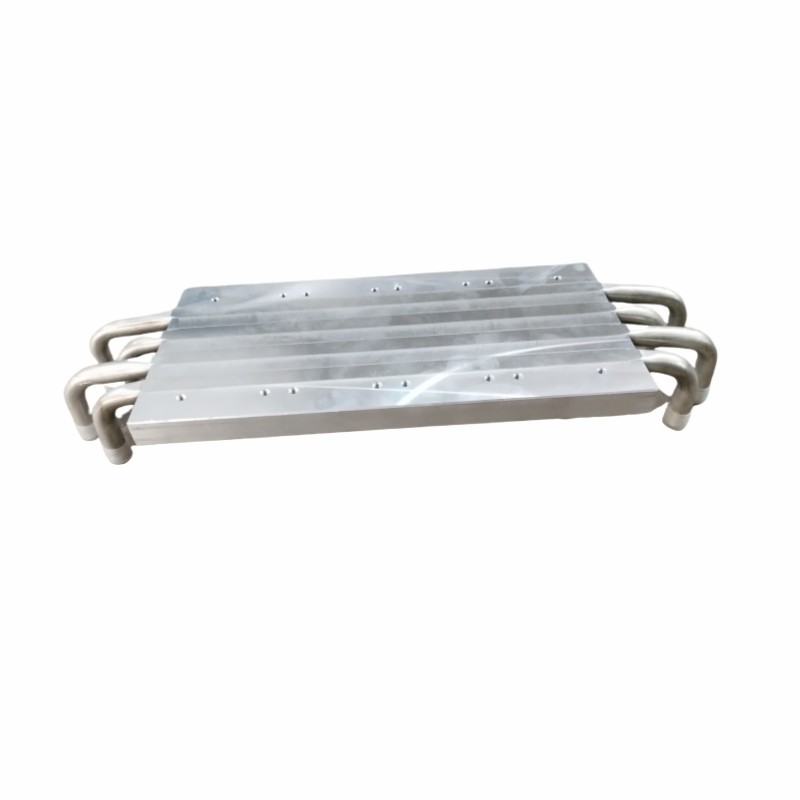
Heat is the enemy of electronic components, and IGBT modules are no exception. You need to make sure that the module can dissipate the heat generated during operation. This is where Water Cooling Plate for IGBT Modules come in handy.
A water cooling plate can help to transfer the heat away from the IGBT module, keeping it at a safe operating temperature. When choosing an IGBT module, you should also consider its thermal resistance and the heat sink requirements.
Matching the IGBT Module with Specific Loads
Motors
When matching an IGBT module with a motor, you need to consider the motor's type (AC or DC), power rating, and operating speed. AC motors typically require a three-phase IGBT module, while DC motors can use a single-phase module.
The power rating of the IGBT module should be higher than the motor's power rating to handle any starting currents or overloads. You also need to ensure that the module can provide the right frequency and voltage to control the motor's speed and torque.
Induction Heating Systems
Induction heating systems use IGBT modules to generate high-frequency alternating currents. In this case, the IGBT module needs to have a high switching frequency and be able to handle high currents.
You also need to consider the impedance matching between the IGBT module and the induction coil. This ensures that the maximum amount of power is transferred from the module to the coil. Accessories like KK Thyristor and Transformer for Intermediate Frequency Furnace can be used in conjunction with the IGBT module to optimize the performance of the induction heating system.
Testing and Validation
Once you've selected an IGBT module based on the above factors, it's important to test and validate the system. You can use test equipment to measure the voltage, current, and temperature of the module during operation.
If you notice any issues, such as overheating or abnormal voltage and current readings, you might need to re-evaluate your choice of IGBT module or make some adjustments to the system.
Conclusion
Matching the IGBT module with the load is a complex but essential task. By considering factors like voltage rating, current rating, switching frequency, and thermal considerations, you can ensure that your system operates efficiently and reliably.
If you're still unsure about which IGBT module is right for your load, don't hesitate to reach out. As a supplier, I'm here to help you make the best choice. Whether you need more information, technical support, or want to discuss your specific requirements, feel free to contact me for procurement and further discussions.
References
- Mohan, N., Undeland, T. M., & Robbins, W. P. (2012). Power Electronics: Converters, Applications, and Design. Wiley.
- Rashid, M. H. (2011). Power Electronics Handbook. Academic Press.