

Radiation plays a significant role in the heat transfer of a plate type heat sink, and understanding its impact is crucial for both manufacturers and users. As a supplier of Plate Type Heat Sink, I've seen firsthand how radiation can affect the performance of these heat sinks. In this blog post, I'll dive into the details of radiation's impact on heat transfer in plate type heat sinks.
Basics of Heat Transfer in Plate Type Heat Sinks
Before we get into radiation, let's quickly go over the basics of heat transfer in plate type heat sinks. Heat transfer generally occurs through three main mechanisms: conduction, convection, and radiation. In a plate type heat sink, conduction is the process by which heat moves through the solid material of the heat sink, from a hot source to the cooler parts of the sink. Convection involves the transfer of heat through the movement of fluids, like air or water, over the surface of the heat sink.
What is Radiation in Heat Transfer?
Radiation is a unique form of heat transfer. Unlike conduction and convection, it doesn't require a medium to transfer heat. All objects with a temperature above absolute zero emit thermal radiation, which is a type of electromagnetic radiation. For a plate type heat sink, the amount of radiation it emits depends on its temperature, surface area, and the emissivity of its surface. The emissivity is a measure of how effectively an object can emit radiation, with a value ranging from 0 to 1. A perfect emitter, known as a blackbody, has an emissivity of 1.
Impact of Radiation on Heat Transfer
- Enhanced Heat Dissipation: Radiation can significantly enhance the overall heat dissipation of a plate type heat sink. In situations where conduction and convection are limited, such as in a vacuum or in a low - airflow environment, radiation becomes the primary mode of heat transfer. For example, in some aerospace applications, where air is scarce, the heat sink relies heavily on radiation to get rid of excess heat.
- Surface Properties Matter: The surface properties of the plate type heat sink have a huge impact on radiation heat transfer. A heat sink with a high - emissivity surface will radiate more heat compared to a low - emissivity one. This is why some heat sinks are coated with special materials to increase their emissivity. For instance, a black anodized finish on an aluminum heat sink can increase its emissivity, boosting the amount of radiation heat transfer.
- Temperature Dependence: The amount of heat radiated by a plate type heat sink is strongly dependent on its temperature. According to the Stefan - Boltzmann law, the power radiated per unit area is proportional to the fourth power of the absolute temperature. This means that as the temperature of the heat sink increases, the amount of heat radiated increases exponentially. So, in high - temperature applications, radiation can play a much more significant role in heat transfer.
Factors Affecting Radiation in a Plate Type Heat Sink
- Surface Finish: A rough surface finish can increase the effective surface area available for radiation and also change the emissivity. For example, a machined or textured surface might have a higher emissivity compared to a polished surface. This is because the rough surface can trap more radiation and emit it more effectively.
- Shape and Geometry: The shape and geometry of the plate type heat sink can affect radiation. Heat sinks with a larger surface area will radiate more heat, all other things being equal. Additionally, the orientation of the fins and plates can also influence the radiation pattern. For example, a vertically oriented heat sink might have different radiation characteristics compared to a horizontally oriented one.
Applications and Considerations
In various industries, the impact of radiation on the heat transfer of plate type heat sinks is of great importance. In data centers, where there are numerous electronic components generating heat, plate type heat sinks need to be highly efficient. Radiation can help in these settings, especially when air - cooling systems are under stress due to high heat loads.
In industrial settings, Closed Cooling Tower and Closed Cooler Auxiliary Equipment often work in conjunction with plate type heat sinks. Understanding the role of radiation in heat transfer can help in the design and optimization of these systems. For example, in a closed - loop cooling system, the heat sink's ability to radiate heat can reduce the load on the cooling tower, leading to more energy - efficient operation.
Conclusion
In conclusion, radiation is a powerful factor in the heat transfer of plate type heat sinks. Its impact can't be ignored, especially in certain applications and environments. As a supplier, we're always looking for ways to optimize the performance of our plate type heat sinks by taking advantage of radiation. Whether it's through surface treatments to increase emissivity or by designing heat sinks with a larger surface area, we strive to make our products as efficient as possible.
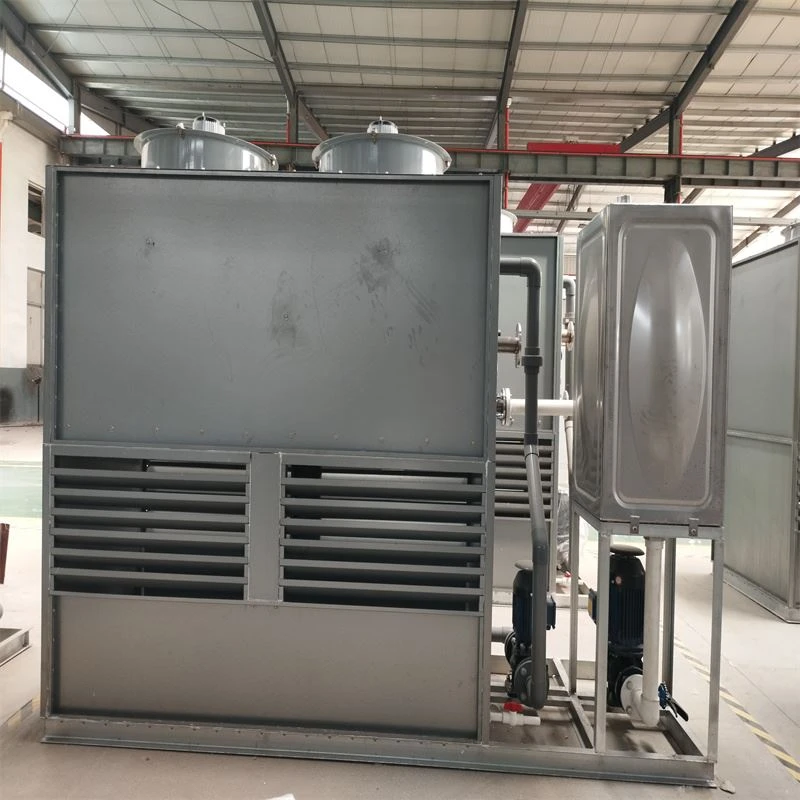

If you're in need of a high - quality plate type heat sink for your application, we'd love to hear from you. We can discuss your specific requirements and help you find the best solution. Don't hesitate to reach out for a consultation and start the procurement process.
References
- Incropera, F. P., & DeWitt, D. P. (2002). Fundamentals of Heat and Mass Transfer. Wiley.
- Holman, J. P. (2002). Heat Transfer. McGraw - Hill.