

Hey there! As a supplier of KK thyristors, I often get asked about the reverse blocking capability of these little powerhouses. So, let's dive right in and break it down in a way that's easy to understand.
First off, what's a KK thyristor? Well, it's a type of semiconductor device that's mainly used in high - power applications like industrial heating, welding, and power conversion. You can think of it as a switch that can handle a whole lot of electrical power.
Now, onto the main topic: reverse blocking capability. In simple terms, reverse blocking is the ability of a KK thyristor to prevent the flow of current when a reverse voltage is applied across its terminals. When we talk about a voltage being "reverse," we mean that the polarity is the opposite of what's needed to turn the thyristor on.
Let's say you have a regular electrical circuit with a KK thyristor. When the voltage across the thyristor is in the forward direction (the right way around), and it reaches a certain value, the thyristor will "turn on" and allow current to flow through it. But when the voltage is in the reverse direction, the thyristor is supposed to act like an open circuit, blocking the current.
Why is this reverse blocking capability so important? Well, in real - world applications, electrical systems can experience voltage spikes and reverse voltages due to various reasons. For example, when an inductive load is suddenly disconnected, it can generate a reverse voltage. If the KK thyristor doesn't have good reverse blocking capability, this reverse voltage can cause current to flow in the wrong direction, which can damage the thyristor itself and other components in the circuit.
The reverse blocking capability of a KK thyristor is measured by its reverse breakdown voltage. This is the maximum reverse voltage that the thyristor can withstand without breaking down and allowing current to flow. Different KK thyristors have different reverse breakdown voltages, depending on their design and intended use.
When choosing a KK thyristor for a particular application, it's crucial to consider the reverse blocking requirements. You need to make sure that the thyristor you select can handle the maximum reverse voltage that might occur in your circuit. If you choose a thyristor with a too - low reverse breakdown voltage, it could fail prematurely, leading to costly downtime and repairs.
There are several factors that can affect the reverse blocking capability of a KK thyristor. One of the main factors is the temperature. As the temperature of the thyristor increases, its reverse breakdown voltage tends to decrease. This means that in high - temperature environments, you might need to choose a thyristor with a higher rated reverse breakdown voltage to ensure reliable operation.

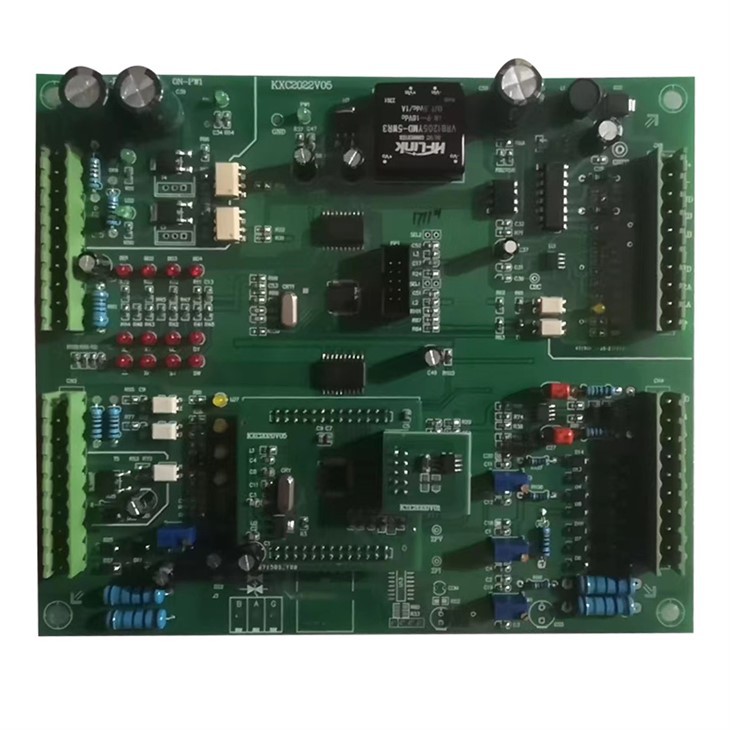
Another factor is the doping concentration in the semiconductor material of the thyristor. The doping process is used to create the different layers in the thyristor, and the concentration of dopants can have a significant impact on its electrical properties, including the reverse blocking capability.
Now, as a KK thyristor supplier, I also want to mention some of the related accessories that can work well with our thyristors. For example, if you're into induction power supply applications, you might be interested in the Evaluation Board for IGBT Module. This board can help you test and evaluate the performance of IGBT modules, which are often used in conjunction with KK thyristors in power electronics.
Also, the Induction Heating Capacitor is an essential component in induction heating systems. It helps to store and release electrical energy, working in harmony with the KK thyristor to provide efficient heating.
And let's not forget about the Water Cooling Plate for IGBT Modules. Since high - power semiconductor devices like KK thyristors and IGBT modules generate a lot of heat, proper cooling is crucial. This water - cooling plate can effectively dissipate the heat, ensuring the long - term reliability of your power electronics system.
If you're in the market for KK thyristors or any of these related accessories, I'd love to have a chat with you. Whether you're working on a small - scale project or a large - scale industrial application, I can help you find the right products that meet your specific requirements. We've got a wide range of KK thyristors with different specifications, and our team of experts can provide you with all the technical support you need.
So, don't hesitate to reach out if you have any questions or if you're ready to start your procurement. Let's work together to build efficient and reliable power electronics systems!
References
- Power Electronics: Converters, Applications, and Design by Ned Mohan, Tore M. Undeland, and William P. Robbins
- Semiconductor Physics and Devices: Basic Principles by Donald A. Neamen