

As a leading supplier of hydraulic stations, I often encounter inquiries about the working principle of hydraulic pumps in our hydraulic stations. Understanding how these pumps operate is crucial for anyone involved in industrial applications, from engineers to maintenance personnel. In this blog post, I will delve into the intricacies of hydraulic pumps, explaining their fundamental concepts and the role they play in hydraulic systems.
Basic Concepts of Hydraulic Systems
Before we explore the working principle of hydraulic pumps, it's essential to grasp the basic concepts of hydraulic systems. Hydraulic systems use a liquid, typically oil, to transmit power from one point to another. The fundamental principle behind these systems is Pascal's law, which states that when pressure is applied to a confined fluid, the pressure change occurs throughout the entire fluid.
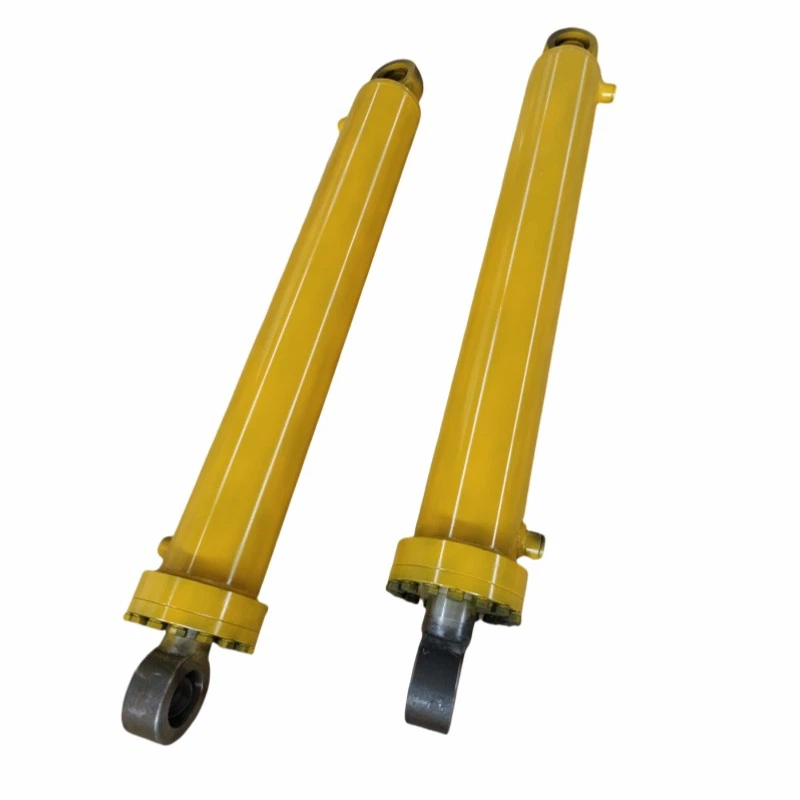
In a hydraulic system, the hydraulic pump is the heart that generates the necessary pressure to move the fluid. The pump draws in hydraulic fluid from a reservoir and then discharges it at a higher pressure into the system. This pressurized fluid is then used to drive various hydraulic components, such as Hydraulic Cylinder, motors, and valves.
Types of Hydraulic Pumps
There are several types of hydraulic pumps, each with its own unique working principle and characteristics. The most common types include gear pumps, vane pumps, and piston pumps.
Gear Pumps
Gear pumps are one of the simplest and most widely used types of hydraulic pumps. They consist of two meshing gears, typically a driving gear and a driven gear, enclosed in a housing. As the gears rotate, they create chambers that trap the hydraulic fluid at the inlet side of the pump. As the gears continue to rotate, these chambers move towards the outlet side, where the fluid is forced out under pressure.
Gear pumps are known for their simplicity, reliability, and relatively low cost. They are suitable for applications that require a constant flow rate and moderate pressure. However, they are not as efficient as other types of pumps and may generate more noise.

Vane Pumps
Vane pumps use a series of vanes that slide in and out of slots in a rotor to create the pumping action. The rotor is eccentrically mounted within a housing, and as it rotates, the vanes are forced outwards by centrifugal force, creating chambers that trap and move the hydraulic fluid.
Vane pumps are more efficient than gear pumps and can operate at higher pressures. They are also quieter and have a longer service life. However, they are more complex and expensive to manufacture.
Piston Pumps
Piston pumps are the most efficient and versatile type of hydraulic pumps. They use pistons that reciprocate within cylinders to create the pumping action. There are two main types of piston pumps: axial piston pumps and radial piston pumps.
Axial piston pumps have pistons arranged in a circular pattern around a central shaft. As the shaft rotates, the pistons move in and out of the cylinders, creating chambers that trap and move the hydraulic fluid. Axial piston pumps are known for their high efficiency, high pressure capabilities, and variable flow rate.
Radial piston pumps have pistons arranged radially around a central axis. The pistons are driven by a cam or swashplate, which causes them to move in and out of the cylinders. Radial piston pumps are typically used in high-pressure applications, such as in industrial presses and heavy machinery.
Working Principle of a Hydraulic Pump
Regardless of the type of hydraulic pump, the basic working principle remains the same. The pump creates a vacuum at the inlet side to draw in the hydraulic fluid from the reservoir. This is achieved by creating a low-pressure area within the pump chamber. Once the fluid is drawn in, the pump then compresses it and discharges it at a higher pressure into the system.
Let's take a closer look at the working principle of a piston pump as an example. In an axial piston pump, the pistons are arranged in a circular pattern around a central shaft. As the shaft rotates, the pistons are forced to move in and out of the cylinders by a swashplate. When the piston moves out of the cylinder, it creates a vacuum, which draws in the hydraulic fluid from the reservoir. As the piston moves back into the cylinder, it compresses the fluid and forces it out through the outlet port.
The pressure generated by the pump is determined by the size of the pistons, the speed of rotation, and the load on the system. The flow rate, on the other hand, is determined by the displacement of the pump, which is the volume of fluid that the pump can deliver per revolution.
Importance of Hydraulic Pumps in Hydraulic Stations
Hydraulic pumps play a crucial role in hydraulic stations. They are responsible for generating the pressure and flow rate required to operate the hydraulic components in the system. Without a properly functioning pump, the hydraulic system would not be able to perform its intended tasks.
In addition to providing power, hydraulic pumps also help to maintain the stability and efficiency of the hydraulic system. They ensure that the fluid is circulated evenly throughout the system, preventing the formation of air pockets and ensuring that all components receive an adequate supply of fluid.
Applications of Hydraulic Stations
Hydraulic stations are used in a wide range of industrial applications, including manufacturing, construction, agriculture, and transportation. Some common applications include:
- Industrial Machinery: Hydraulic stations are used to power various types of industrial machinery, such as presses, injection molding machines, and machine tools.
- Construction Equipment: Hydraulic systems are widely used in construction equipment, such as excavators, loaders, and bulldozers, to provide the power and control needed for lifting, digging, and moving heavy loads.
- Agricultural Machinery: Hydraulic systems are used in agricultural machinery, such as tractors, combines, and sprayers, to operate various functions, such as steering, lifting, and spraying.
- Transportation: Hydraulic systems are used in vehicles, such as trucks, buses, and trains, to operate the brakes, steering, and suspension systems.
Additional Accessories in Hydraulic Systems
In addition to hydraulic pumps and cylinders, there are several other accessories that are commonly used in hydraulic systems. These accessories play important roles in ensuring the proper functioning and efficiency of the system. Some of these accessories include Induction Furnace Dust Removal Hood and PTFE Sheets.
Induction furnace dust removal hoods are used to collect and remove dust and other contaminants generated during the operation of induction furnaces. These hoods help to maintain a clean and safe working environment and prevent the buildup of dust in the hydraulic system, which can cause damage to the components.
PTFE sheets are used as seals and gaskets in hydraulic systems. They have excellent chemical resistance, low friction coefficient, and high temperature resistance, making them ideal for use in hydraulic applications. PTFE sheets help to prevent leakage of hydraulic fluid and ensure the proper functioning of the system.
Conclusion
In conclusion, the working principle of a hydraulic pump in a hydraulic station is based on the fundamental concepts of fluid mechanics and Pascal's law. By creating a vacuum at the inlet side and compressing the fluid at the outlet side, the pump is able to generate the pressure and flow rate required to operate the hydraulic components in the system.
As a supplier of hydraulic stations, we understand the importance of providing high-quality pumps and accessories to our customers. We offer a wide range of hydraulic pumps, including gear pumps, vane pumps, and piston pumps, to meet the diverse needs of our customers. Our pumps are designed and manufactured to the highest standards of quality and reliability, ensuring that they provide long-lasting performance and trouble-free operation.
If you are in the market for a hydraulic station or need more information about our products and services, please do not hesitate to contact us. We would be happy to discuss your specific requirements and provide you with a customized solution that meets your needs.
References
- Fluid Power Handbook, edited by the International Fluid Power Society.
- Hydraulic Systems and Components, by George Escher.
- Industrial Hydraulics: Theory and Applications, by F. S. Merritt.